Sealing Asphalt Driveway Pros and Cons
If you manage a residential community, a commercial plaza or even a single-family home, you want your pavement to look good and last as long as possible. Asphalt is an investment, and like any investment, it needs care to perform at its best. One of the most common ways to protect asphalt is through sealcoating.
But before you decide, it’s important to understand what sealcoating really is, what it does and the pros and cons of adding it to your maintenance plan.
What Is Asphalt Sealcoating?
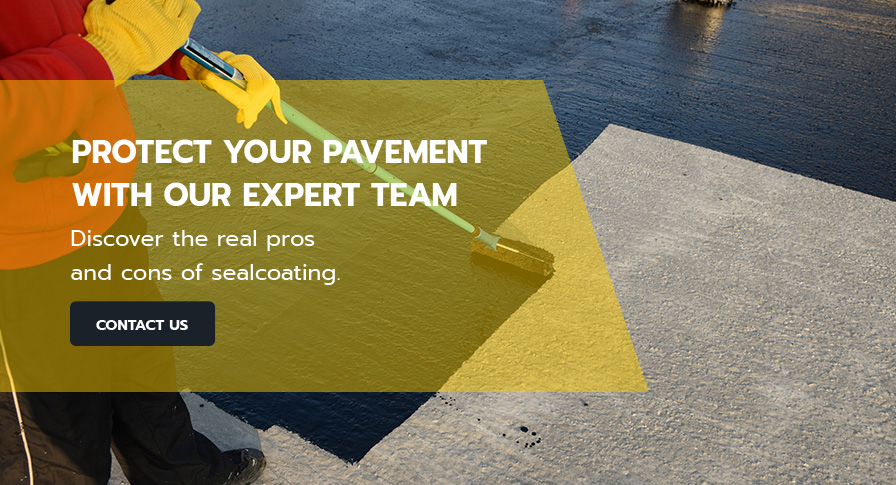
Sealcoating is a preventive maintenance process designed to shield asphalt from everyday wear and tear. It involves applying a protective liquid layer, usually a coal tar or asphalt-based emulsion, across the pavement’s surface. Think of it like sunscreen for your driveway or parking lot — it doesn’t rebuild damaged skin, but it helps prevent further harm.
Sealcoating is not a fix for structural issues. If your asphalt already has potholes, deep cracks or crumbling edges, those need to be repaired before sealcoating can be applied. Instead, sealcoating serves as a barrier that slows down deterioration caused by sunlight, water, oil and other elements that gradually weaken asphalt.
In short, if you’ve ever wondered what sealcoating is, it’s best thought of as protective armor. It’s something that preserves what you already have rather than repairing what’s broken.
The Advantages of Sealcoating Asphalt Surfaces
Sealcoating is popular for good reason. It offers a wide range of benefits that matter to property owners, managers and residents alike.
Extended Pavement Lifespan
Sealcoatings can add years to your asphalt’s lifespan. Asphalt naturally breaks down when exposed to three main culprits:
- Water
- Oxygen
- Chemicals from vehicles
Rain and standing water can seep into tiny cracks, expanding them over time. The sun oxidizes asphalt, causing it to become brittle and lose its rich black color. Oils, gasoline and other fluids from cars slowly eat away at the surface.
Sealcoating addresses all of these risks by forming a protective layer on top of the asphalt. According to the National Asphalt Pavement Association (NAPA), surface seals are used to retard oxidation of the asphalt. This layer slows down water penetration and resists damage from vehicle fluids. By acting as a first line of defense, sealcoating gives your pavement a longer life beyond its expected service years.
Improved Appearance
A driveway or parking lot with faded, gray asphalt can make an otherwise well-kept property look tired. Sealcoating restores the surface to a deep, uniform black finish, instantly making the area look newer and more cared for.
For residential neighborhoods, this contributes to a more attractive community. For commercial properties, it makes a better impression on customers and tenants. In both cases, improved appearance can translate into higher property value and a stronger sense of pride.
Fewer Long-Term Repair Costs
Sealcoating is an investment that saves money over time. While it does come with an upfront cost, that expense is minor compared to the price of major structural repairs. Repaving, milling or full asphalt replacement can cost several times more than a routine sealcoat.
By committing to regular sealcoating, you extend the life of your pavement and avoid reaching the point where expensive reconstruction becomes unavoidable. It’s a simple example of “pay a little now or pay a lot later.”
Reduced Maintenance
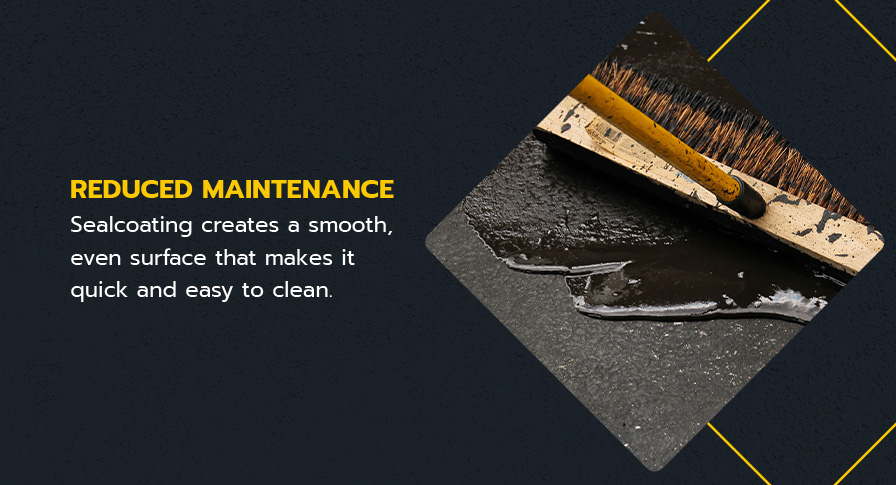
Sealcoating creates a smooth, even surface that makes it quick and easy to clean. Dirt, leaves and debris are less likely to stick in rough or oxidized patches, which means sweeping and general cleaning take less effort. For commercial properties, this can reduce the workload of maintenance staff and help keep the property looking professional with less effort.
Potential Limitations of Sealcoating
While the benefits are strong, it’s equally important to consider the potential drawbacks. A balanced perspective helps property managers make confident, informed decisions.
Required Downtime
After sealcoating, the surface needs time to cure — usually between 24 and 48 hours. During that time, the driveway, parking lot or roadway must be closed to traffic.
For residential homeowners, that might mean parking on the street for a couple of days. For commercial properties, it requires planning to minimize disruption for tenants, customers or employees.
Results Depend on Preparation
Sealcoating only works when it’s applied correctly. If a contractor doesn’t properly clean and prepare the surface — or if the material is applied too thickly or thinly — it can lead to the coat peeling, flaking or not protecting the surface underneath.
That’s why it’s critical to hire experienced professionals who know the right techniques and use high-quality materials. Cutting corners on the application can undermine the entire investment.
Is Sealcoating Worth It for a Commercial Property?
For property managers and homeowners associations (HOAs), the question often comes down to return on investment (ROI). Is sealcoating worth it? In most cases, the answer is yes. The cost of sealcoating every two to three years is significantly lower than the cost of large-scale asphalt repair or replacement.
However, a few factors should be considered before making the decision:
- Age and condition of the asphalt: Sealcoating works best on surfaces that are still structurally sound. If the pavement is already failing, sealcoating won’t provide much benefit.
- Traffic volume: Areas with heavy truck traffic or high vehicle turnover may wear faster, requiring more frequent applications.
- Budget priorities: While it’s an ongoing cost, sealcoating provides value in extending lifespan and improving appearance, which can be especially important for commercial and residential communities.
When you weigh the relatively modest cost of sealcoating against the much larger cost of major repairs, it’s clear why so many property managers consider it a smart, preventive investment.
How Long Does Sealcoating Last in South Florida?
In South Florida, contractors typically recommend sealcoating every 2-3 years. The local climate plays a major role in this timeline. The region’s intense, year-round sun speeds up oxidation, while seasonal downpours and standing water test the limits of even the best sealcoat.
The good news is that with high-quality materials and skilled application, your pavement can achieve the full expected lifespan. Choosing a professional crew that understands South Florida’s unique challenges is the best way to maximize results.
If you’re asking yourself how long sealcoating lasts in this climate, the answer depends not just on the weather but also on who applies it and what materials they use. Expertise and quality make the difference between a sealcoat that fails in a year and one that holds up beautifully for several seasons.
Protect Your Pavement With Our Expert Team
Your asphalt is a major investment, and it deserves the same level of care you’d give any other part of your property. The Paving Lady is a trusted full-service, local paving company with over 35 years of experience serving South Florida with sealcoating, line stripping, concrete paving and more.
We understand the unique climate challenges here — relentless sun, heavy rains and high traffic — and we know how to apply sealcoating that works. Our team partners with commercial clients, HOAs and property managers to create customized pavement maintenance plans that fit budgets and deliver results.
If you want to safeguard your asphalt with premium seal coating materials and careful techniques for the best results, it’s time to act. Contact The Paving Lady today online or call us at (561) 567-7182 for a professional assessment from one of our specialists.